Appearance
Transition Class Change breaking
Overview
The v-enter transition class has been renamed to v-enter-from and the v-leave transition class has been renamed to v-leave-from.
2.x Syntax
Before v2.1.8, we had two transition classes for each transition direction: initial and active states.
In v2.1.8, we introduced v-enter-to to address the timing gap between enter/leave transitions. However, for backward compatibility, the v-enter name was untouched:
css
.v-enter,
.v-leave-to {
  opacity: 0;
}

.v-leave,
.v-enter-to {
  opacity: 1;
}
This became confusing, as enter and leave were broad and not using the same naming convention as their class hook counterparts.
3.x Update
In order to be more explicit and legible, we have now renamed these initial state classes:
css
.v-enter-from,
.v-leave-to {
  opacity: 0;
}

.v-leave-from,
.v-enter-to {
  opacity: 1;
}
It's now much clearer what the difference between these states is.
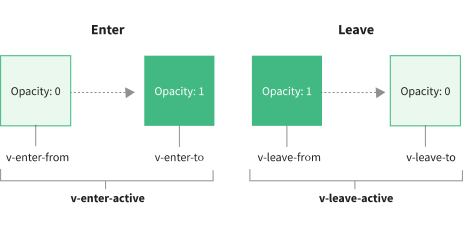
The <transition> component's related prop names are also changed:
leave-classis renamed toleave-from-class(can be written asleaveFromClassin render functions or JSX)enter-classis renamed toenter-from-class(can be written asenterFromClassin render functions or JSX)
Migration Strategy
- Replace instances of
.v-enterto.v-enter-from - Replace instances of
.v-leaveto.v-leave-from - Replace instances of related prop names, as above.